We had this discussion the other day in class and I'd like to try and get some feedback on it. There are two questions that come up often in art. What is art? and What is good art? Often we use the second question after we've answered the first in the affirmative. But what does it mean for something to be good art? We can either say that good/bad art is a subjective issue, in which case the conversation ends.
But if we attempt to identify good art on an objective basis we see that any attribute that could be applied to an objective definition of art in general. Which leads us to another question, should we even discuss what makes up the qualities of good art?
Sunday, May 2, 2010

Wednesday, April 28, 2010
Response to Jenna's "Knowledge vs Emotion"
There are two sides to every coin. While ignorance of the art world may in some rare cases allow you to feel more emotionally attached to an art work. Those situations are less common than the reverse. Where knowledge of the art world provides more context for a work of art and granting it more meaning. I believe that the example we used in class was Moby-Dick. Without context Moby-Dick is just a story about a man and a whale, while political awareness of that time period will help you understand the full meaning of the novel.
As for your question, I do not believe that the two are mutually exclusive. Knowledge of an art work does not necessarily mean that you cannot have a personal meaning attached to it. More context for an art object could allow you to interpret it in a more personal way.
Is it possible for a work of art to mean more to an observer than the artist?
As for your question, I do not believe that the two are mutually exclusive. Knowledge of an art work does not necessarily mean that you cannot have a personal meaning attached to it. More context for an art object could allow you to interpret it in a more personal way.
Is it possible for a work of art to mean more to an observer than the artist?
Monday, April 26, 2010
Wait? Seriously?
Let's take the power away from the white men. That's fine. I'm all for equal distribution of power. But this discussion of race as a factor for artistic ability or judgment is downright offensive. Why is it okay to talk down about someone's race if they are white?
Perhaps I am mistaken, after all, all white men grew up unoppressed. They all have lived affluently since the beginning of recorded history. The serfs of Feudal Europe were really spoiled aristocrats, right? The Slavs and Polish that were denied rights and ultimately executed during the reign of the Nazis had it too easy, anyway.
To all of the white men in class. Did you all grow up rich and at the top of the world? Am I the only white man who grew up lower-middle class? Oh, my mistake. It's being Jewish isn't it, that's what makes it okay for me to be philosophical thinker.
My Judaism voids out my whiteness, I guess.
Didn't we spend a long time in class today discussing how dangerous it is to group people together based on race or ethnicity as adversaries? But I guess it's okay, because they're just white men. They've had their time.
I apologize for not bringing this up in class when it occurred, but I was so shocked that I may have said things that I didn't mean. I wanted time to collect my thoughts before I made a new argument.
If you have not read my previous post, "Old Dead White Men," then please do so before responding. It will add context.
This does not count for one of my weekly posts. I apologize for how inarticulate and, well rabid, this post was.
Perhaps I am mistaken, after all, all white men grew up unoppressed. They all have lived affluently since the beginning of recorded history. The serfs of Feudal Europe were really spoiled aristocrats, right? The Slavs and Polish that were denied rights and ultimately executed during the reign of the Nazis had it too easy, anyway.
To all of the white men in class. Did you all grow up rich and at the top of the world? Am I the only white man who grew up lower-middle class? Oh, my mistake. It's being Jewish isn't it, that's what makes it okay for me to be philosophical thinker.
My Judaism voids out my whiteness, I guess.
Didn't we spend a long time in class today discussing how dangerous it is to group people together based on race or ethnicity as adversaries? But I guess it's okay, because they're just white men. They've had their time.
I apologize for not bringing this up in class when it occurred, but I was so shocked that I may have said things that I didn't mean. I wanted time to collect my thoughts before I made a new argument.
If you have not read my previous post, "Old Dead White Men," then please do so before responding. It will add context.
This does not count for one of my weekly posts. I apologize for how inarticulate and, well rabid, this post was.
Thursday, April 22, 2010
Roger Ebert
Link
I am just one of many who was offended by Ebert's essay. And the larger portion of the Internet seems to be on the warpath.
But there are a few particular statements that I take issue with.
This is one of the most ignorant statements that I've come across recently. He asks what ideas are contained within these works of art. I'm not even sure what he's trying to get at. I have not read all of these works, but I'd be willing to bet that there is some idea to be communicated by them.
The next few paragraphs are ad-hominem attacks on several games that he says are not are for various reasons.
Waco: He is offended by the subject matter, therefore it is not art.
Braid: He doesn't feel that he would learn anything about his past from it. It is not art.
Flower: May be art, but without a user interface it isn't a game.
We should ignore this whole paragraph. He admits that his bias makes him unable to speak on the subject. Let's move on.
But this is his most egregious mistake. Fischer did not invent chess, nor Jordan basketball, nor Butkus football. So why does he consider the gamer the artist? Is the concert goer an artist? No, so why does he focus on the gamer?
What would a video game need to do to fit a definition of art?
I am just one of many who was offended by Ebert's essay. And the larger portion of the Internet seems to be on the warpath.
But there are a few particular statements that I take issue with.
One obvious difference between art and games is that you can win a game. It has rules, points, objectives, and an outcome.How does he know this? Where in his definition of art does it say that it must be lacking in rules, points, objectives and an outcome?
Santiago now phrases this in her terms: "Art is a way of communicating ideas to an audience in a way that the audience finds engaging." Yet what ideas are contained in Stravinsky, Picasso, "Night of the Hunter," "Persona," "Waiting for Godot," "The Love Song of J. Alfred Prufrock?" Oh, you can perform an exegesis or a paraphrase, but then you are creating your own art object from the materials at hand.
This is one of the most ignorant statements that I've come across recently. He asks what ideas are contained within these works of art. I'm not even sure what he's trying to get at. I have not read all of these works, but I'd be willing to bet that there is some idea to be communicated by them.
The next few paragraphs are ad-hominem attacks on several games that he says are not are for various reasons.
Waco: He is offended by the subject matter, therefore it is not art.
Braid: He doesn't feel that he would learn anything about his past from it. It is not art.
Flower: May be art, but without a user interface it isn't a game.
Now she shows stills from early silent films such as George Melies' "A Voyage to the Moon" (1902), which were "equally simplistic." Obviously, I'm hopelessly handicapped because of my love of cinema, but Melies seems to me vastly more advanced than her three modern video games. He has limited technical resources, but superior artistry and imagination.
We should ignore this whole paragraph. He admits that his bias makes him unable to speak on the subject. Let's move on.
Why are gamers so intensely concerned, anyway, that games be defined as art? Bobby Fischer, Michael Jordan and Dick Butkus never said they thought their games were an art form. Nor did Shi Hua Chen, winner of the $500,000 World Series of Mah Jong in 2009. Why aren't gamers content to play their games and simply enjoy themselves? They have my blessing, not that they care.
But this is his most egregious mistake. Fischer did not invent chess, nor Jordan basketball, nor Butkus football. So why does he consider the gamer the artist? Is the concert goer an artist? No, so why does he focus on the gamer?
What would a video game need to do to fit a definition of art?
Tuesday, April 20, 2010
Response to Nicole's "Language Response"
I'd like to address a couple of points in your response before I move on to the new question.
In my post I stressed that I was not advocating for the destruction of any languages, as that would be a tragic cultural loss. The creation of a Standard language would be strictly for official communication. Each person would be taught their native language plus Standard so that they retain the artistry of their native language and gain the ability to communicate with anyone on Earth.
It would be madness for me to say that one language is superior to another. The problem with having each person learn many languages is that it would only improve their ability to communicate slightly. There are almost 7000 languages on Earth, if a person knows 4 or 5 languages then they are exceptional. When a person is educated in America they are taught English and then usually either French or Spanish, not because they are the most culturally rich languages. But because the idea is that the student will most likely encounter those languages in life. It is for communication.
I've known people to learn other languages just to appreciate art in those languages properly. I love this, I think it is one of the best things a person in pursuit of good art can do. I myself spent a good deal of time studying Middle English so that I could properly read the Canterbury Tales. But I'm never going to use that language for communication, just for art.
It's like the Catholic who speak their own native language, but mostly use Latin for their ceremonies. Or the Reform Jews, a sect a belong to, who speak mostly in English but use Hebrew for our own ceremonies. A language for communication, a language for religion, a language for art and culture.
The idea of Standard may not be beautiful, but it is efficient.
Now, I'd say that English is already evolving. It's constantly evolving, it's one of the hallmarks of the language. Urban American-English, Spanglish, Welsh-English, Scotch-English, these are all examples of the English language changing on it's own.
If we adopted a Standard language, do you believe that native languages would fall out of use?
In my post I stressed that I was not advocating for the destruction of any languages, as that would be a tragic cultural loss. The creation of a Standard language would be strictly for official communication. Each person would be taught their native language plus Standard so that they retain the artistry of their native language and gain the ability to communicate with anyone on Earth.
It would be madness for me to say that one language is superior to another. The problem with having each person learn many languages is that it would only improve their ability to communicate slightly. There are almost 7000 languages on Earth, if a person knows 4 or 5 languages then they are exceptional. When a person is educated in America they are taught English and then usually either French or Spanish, not because they are the most culturally rich languages. But because the idea is that the student will most likely encounter those languages in life. It is for communication.
I've known people to learn other languages just to appreciate art in those languages properly. I love this, I think it is one of the best things a person in pursuit of good art can do. I myself spent a good deal of time studying Middle English so that I could properly read the Canterbury Tales. But I'm never going to use that language for communication, just for art.
It's like the Catholic who speak their own native language, but mostly use Latin for their ceremonies. Or the Reform Jews, a sect a belong to, who speak mostly in English but use Hebrew for our own ceremonies. A language for communication, a language for religion, a language for art and culture.
The idea of Standard may not be beautiful, but it is efficient.
Now, I'd say that English is already evolving. It's constantly evolving, it's one of the hallmarks of the language. Urban American-English, Spanglish, Welsh-English, Scotch-English, these are all examples of the English language changing on it's own.
If we adopted a Standard language, do you believe that native languages would fall out of use?
Sunday, April 18, 2010
Response to Aurora's "When is art?"
Simply put, Aurora. He's not.
As we discussed in class, for every question that could be raised about a work of art based on the word "when" we can find a counterpart with the word "what."
When is something a work of art? What makes something a work of art?"
When we use an artwork for a common task, is it no longer art? Does the use of an art object control its properties?
While there are some circumstances in which the word "when" more easily creates a question about an art object, it is merely a semantic difference that distracts us from solid discourse.
So can we find any value in Goodman's treatise?
As we discussed in class, for every question that could be raised about a work of art based on the word "when" we can find a counterpart with the word "what."
When is something a work of art? What makes something a work of art?"
When we use an artwork for a common task, is it no longer art? Does the use of an art object control its properties?
While there are some circumstances in which the word "when" more easily creates a question about an art object, it is merely a semantic difference that distracts us from solid discourse.
So can we find any value in Goodman's treatise?
Wednesday, April 14, 2010
The Limits of Language
I was thinking about the idea of genetic mixing the other day. When people of different genetic backgrounds have offspring the chances are that the offspring will be better off than it's parents. This is best exemplified by inherited diseases such as Tay-Sachs disease (Often found in those of Slavic, Jewish, or Eastern-European descent. or Sickle-Cell anemia (often found in those of African descent. In both situations the child is only born with the disease if both parents are carriers. So the chances of someone being born with Sickle-Cell or Tay-Sachs is extremely low if one parent is African and the other is an Ashkenazi Jew.
Now what if we were to apply this same thinking to language, something that's almost has hereditary as genes themselves. By mixing languages we can form a new, more complete language. The example that I used in class is of the coup d'etat, where we didn't have a phrase in English that quite fit in it's place. But there are dozens of other examples, and even more times when we could adopt this strategy.
For instance the word Malquerer is Spanish, it means something to the effect of loving/hating something. There is no word in English to fit this. So what if we adopt it to improve the language. Could we move forward to a single language that combines the best parts of all language to create the most complete linguistic experience?
Of course this would not be a substitute for all languages. The poetry of French, and the forcefulness of German could be lost in this new "Standard" language. A truly tragic loss for humanity. So I'm not advocating getting rid of any language. But creating a standard language to avoid communication problems. Languages like Spanglish and Yiddish before it are combining two languages in an attempt at better communication. It is irrelevant what language that "Standard" is based on.
Is it morally right to advocate for a standard language? Or would be considered too ethnocentric?
Now what if we were to apply this same thinking to language, something that's almost has hereditary as genes themselves. By mixing languages we can form a new, more complete language. The example that I used in class is of the coup d'etat, where we didn't have a phrase in English that quite fit in it's place. But there are dozens of other examples, and even more times when we could adopt this strategy.
For instance the word Malquerer is Spanish, it means something to the effect of loving/hating something. There is no word in English to fit this. So what if we adopt it to improve the language. Could we move forward to a single language that combines the best parts of all language to create the most complete linguistic experience?
Of course this would not be a substitute for all languages. The poetry of French, and the forcefulness of German could be lost in this new "Standard" language. A truly tragic loss for humanity. So I'm not advocating getting rid of any language. But creating a standard language to avoid communication problems. Languages like Spanglish and Yiddish before it are combining two languages in an attempt at better communication. It is irrelevant what language that "Standard" is based on.
Is it morally right to advocate for a standard language? Or would be considered too ethnocentric?
Sunday, April 11, 2010
Response to Tyler's "Serious art"
I completely sympathize with your Frankenstein experience. In high-school we spent entire classes dissecting Holden Caulfied's red hunting hat. (While all I wanted was someone to dissect him so he'd stop whining.)
I think that the over-analysis of some works of literature comes from the belief that all narratives have significant philosophy hidden within them. In my American Rennaisance class, (with Prof. Langston, highly recommended,) we're analyzing Emerson and Thoreau. These two authors wrote their opus magnums as works of philosophy with excellent prose. While the next authors we inspected were Melville and Hawthorne, these authors used narrative as a way to slip in obvious political and philosophical comments. These are legitimate uses of intense literature analysis. But when this idea gets applied to every work of literature we can certainly ruin it.
But, how can we tell when it is appropriate to use these techniques? If we don't intensly analyze each piece of great literature we may miss something important!
I think that the over-analysis of some works of literature comes from the belief that all narratives have significant philosophy hidden within them. In my American Rennaisance class, (with Prof. Langston, highly recommended,) we're analyzing Emerson and Thoreau. These two authors wrote their opus magnums as works of philosophy with excellent prose. While the next authors we inspected were Melville and Hawthorne, these authors used narrative as a way to slip in obvious political and philosophical comments. These are legitimate uses of intense literature analysis. But when this idea gets applied to every work of literature we can certainly ruin it.
But, how can we tell when it is appropriate to use these techniques? If we don't intensly analyze each piece of great literature we may miss something important!
Ethical dilemmas degrading art
So I have thought about the question of Ethical dilemmas degrading what we think of the quality of art. I ask, is it possible to put aside all ethical considerations of a work of art just to consider it for art's sake? This leads me to another thought, is it right to ignore the ethical concerns brought up by the artist? For instance, I think that Russel Crowe is one of the best current actors, but I find his off-camera behavior reprehensible. In this case I was able to separate the artist from the art to appreciate the art. After all, Crowe is simply an ass. And while I think he is a great actor, his performances have little effect on my core emotions.
But I found it more difficult to separate the author Orson Scott Card, who wrote some books that were deeply important to me. I have a strong emotional attachment to his writing. But I am also strongly rooted in my belief that homosexuals and heterosexuals are equally normal and that all people are created equal.
Card however is an outspoken homophobe, and while that never came up in his writing, I find it hard to forget about it when I'm reading his work. Which makes me wonder if it's the right thing to do. I realize that this is more me asking questions than presenting a point, but it's something that I've been wondering about.
Question: Is it morally right to separate an artist from his work if we find the artist's own morals questionable?
But I found it more difficult to separate the author Orson Scott Card, who wrote some books that were deeply important to me. I have a strong emotional attachment to his writing. But I am also strongly rooted in my belief that homosexuals and heterosexuals are equally normal and that all people are created equal.
Card however is an outspoken homophobe, and while that never came up in his writing, I find it hard to forget about it when I'm reading his work. Which makes me wonder if it's the right thing to do. I realize that this is more me asking questions than presenting a point, but it's something that I've been wondering about.
Question: Is it morally right to separate an artist from his work if we find the artist's own morals questionable?
Saturday, April 3, 2010
Response to Aurora's "Weitz"
I love this question, I believe that it is imprecise to say "time period" in the question though. The more appropriate question would involve not time periods, but art movements or continuous types of art. For instance the theory of significant form doesn't hold up in any discussion of what Bell would call descriptive painting as an art form.
Aside from this though I don't believe that we've yet encountered any theories that work within some art movements, but not all. The argument can and is often made that the theories apply to no art, because they are simply wrong.
Another interesting question is, have we encountered any part of the theories of art that are universally true?
Aside from this though I don't believe that we've yet encountered any theories that work within some art movements, but not all. The argument can and is often made that the theories apply to no art, because they are simply wrong.
Another interesting question is, have we encountered any part of the theories of art that are universally true?
Wednesday, March 31, 2010
The Quality of the Observer
In class we discussed the state of the observer as whether or not they are able to decide what is good art. Some of the examples given were the chemically impaired, the very young, and the in-love. I brought up a few examples of chemically impaired artists whom we consider great, and the hypothetical of a young person who knows a lot about art. This was countered by saying that while there are anecdotal instances of these exceptions to the rules, generally people who fall into these categories are not qualified to determine good art.
Is this fair? Where do we draw the line between someone who is too intoxicated to appreciate art? If we are basing on definition of art on what is popularly accepted aren't we committing a logical fallacy? I believe that we are cutting out huge portions of the art/observer community by excluding people deemed too young, too old, too drunk, too high or simply too stressed out to truly appreciate art.
What do you think? Is there really a group of people who are qualified to judge all art?
Is this fair? Where do we draw the line between someone who is too intoxicated to appreciate art? If we are basing on definition of art on what is popularly accepted aren't we committing a logical fallacy? I believe that we are cutting out huge portions of the art/observer community by excluding people deemed too young, too old, too drunk, too high or simply too stressed out to truly appreciate art.
What do you think? Is there really a group of people who are qualified to judge all art?
Wednesday, March 24, 2010
Old Dead White Men
A comment was made in class today that I outwardly ignored for the sake of continuing the conversation, however now that I have a moment to collect my thoughts I would like to address it.
The statement was was something to the effect of that the philosophers in our book have increasing irrelevance to contemporary art because they are "Old dead white men."
Being one, I find it offensive that we can use "white men" as an epithet now that goes largely ignored in class.
I wasn't aware that race and gender affected the validity of your arguments. If this is true than the entirety of my blog may be ignored, as I identify as both Caucasian and male.
If you have continued to read past that line then you are at least open to the idea that all humans are equal and have the potential for valid, relevant philosophical thought.
The mark of a good philosopher is someone who, while possessing many of the intellectual virtues, postulates ideas that are far-reaching and timeless. While we may disagree with Plato, Bell, Tolstoy etc. in some aspects, we should acknowledge that they gave us ideas that were attempts to define art that have been used for the basis of aesthetic philosophy for centuries. To dismiss them all because our ideas of art are evolving is ignorant. Just because cubism is recognized as an art form, does that mean that Tolstoy's theories are automatically outdated and irrelevant?
Because film now exists does that mean that Hume's theories cannot be applied to it?
Does CGI negate the intellect of Freud's desirous theory?
Please forgive the combative nature of this post.
Question: Do you believe that any of these philosophers (Weitz excluded)are still relevant to the discussion of art?
The statement was was something to the effect of that the philosophers in our book have increasing irrelevance to contemporary art because they are "Old dead white men."
Being one, I find it offensive that we can use "white men" as an epithet now that goes largely ignored in class.
I wasn't aware that race and gender affected the validity of your arguments. If this is true than the entirety of my blog may be ignored, as I identify as both Caucasian and male.
If you have continued to read past that line then you are at least open to the idea that all humans are equal and have the potential for valid, relevant philosophical thought.
The mark of a good philosopher is someone who, while possessing many of the intellectual virtues, postulates ideas that are far-reaching and timeless. While we may disagree with Plato, Bell, Tolstoy etc. in some aspects, we should acknowledge that they gave us ideas that were attempts to define art that have been used for the basis of aesthetic philosophy for centuries. To dismiss them all because our ideas of art are evolving is ignorant. Just because cubism is recognized as an art form, does that mean that Tolstoy's theories are automatically outdated and irrelevant?
Because film now exists does that mean that Hume's theories cannot be applied to it?
Does CGI negate the intellect of Freud's desirous theory?
Please forgive the combative nature of this post.
Question: Do you believe that any of these philosophers (Weitz excluded)are still relevant to the discussion of art?
Friday, March 12, 2010
Mixers, Remixers and the like.
When an artist creates music it is their own. They have taken a series of sounds and arranged them in such a way that they find meaningful. In principle this is an idea that most of us can agree with. But then what happens when we introduce the idea of the remixer or the mixer into the world. These are people who take parts of already established music and combine them in a new fashion to produce a song.
I believe that these men and women are in their own rights artists. And just like artists they have varying degrees to the quality of their music. There is a large percentage of these mixers who do very little to change a song, in this case I say that they are still artists. However, they are artists that I feel don't produce very good art.
Do you believe that there is a certain point at which a song becomes a new song? If so is it possible to located this point?
I believe that these men and women are in their own rights artists. And just like artists they have varying degrees to the quality of their music. There is a large percentage of these mixers who do very little to change a song, in this case I say that they are still artists. However, they are artists that I feel don't produce very good art.
Do you believe that there is a certain point at which a song becomes a new song? If so is it possible to located this point?
Sunday, March 7, 2010
Observers as Participants in Art
This was not brought up in class, it's just something that I've been mulling over for the past few days after a conversation I had with my housemates.
Andrew: So he says that there's no difference between going to a concert and listening to a record with extremely high quality headphones.
Ed: That's ridiculous. He really said that?
Andrew: Yeah, and I told him, 'There are so many sensory experiences that you don't get with just listening to the music. There's the band's presence and the lights...
Ed: Not to mention the crowd.
Andrew: Right, wait. What do you mean?
Ed: The crowd, it feeds off of the energy of the band and the band feeds of the energy of the crowd. The quality of the crowd and totally change the concert experience.
Andrew: So, by that logic they are contributors to the performance.
Ed: How do you figure?
Andrew: Well, let's suppose that the individual performance is its own work of art. Completely unique from every other performance.
Ed: Okay
Andrew: And the performance is made up of several elements that alter its quality.
Ed: Which are sound quality, visuals, energy of the band, and energy of the audience.
Andrew: And by this logic the audience would be as much a part of the artwork as the music.
Ed: I don't know about as much as...
Andrew: Okay, then they are a substantial part of the performance, the artwork.
Ed: So you're not trying to say that audience members are artists?
Andrew: No, just that they are a contributing factor to the the artwork, as much as the venue or the particular quality of the band's enthusiasm.
Ed: Alright, I'll give you that.
Question: How important to a performance do you think the energy of the crowd is?
Also any critiques you have for the dialogue will be appreciated, I'm planning on sending an expanded version of it to Thesis XII. The new version will include a new character that will function as a foil to my assertion that "the individual performance is its own work of art. Completely unique from every other performance."
Andrew: So he says that there's no difference between going to a concert and listening to a record with extremely high quality headphones.
Ed: That's ridiculous. He really said that?
Andrew: Yeah, and I told him, 'There are so many sensory experiences that you don't get with just listening to the music. There's the band's presence and the lights...
Ed: Not to mention the crowd.
Andrew: Right, wait. What do you mean?
Ed: The crowd, it feeds off of the energy of the band and the band feeds of the energy of the crowd. The quality of the crowd and totally change the concert experience.
Andrew: So, by that logic they are contributors to the performance.
Ed: How do you figure?
Andrew: Well, let's suppose that the individual performance is its own work of art. Completely unique from every other performance.
Ed: Okay
Andrew: And the performance is made up of several elements that alter its quality.
Ed: Which are sound quality, visuals, energy of the band, and energy of the audience.
Andrew: And by this logic the audience would be as much a part of the artwork as the music.
Ed: I don't know about as much as...
Andrew: Okay, then they are a substantial part of the performance, the artwork.
Ed: So you're not trying to say that audience members are artists?
Andrew: No, just that they are a contributing factor to the the artwork, as much as the venue or the particular quality of the band's enthusiasm.
Ed: Alright, I'll give you that.
Question: How important to a performance do you think the energy of the crowd is?
Also any critiques you have for the dialogue will be appreciated, I'm planning on sending an expanded version of it to Thesis XII. The new version will include a new character that will function as a foil to my assertion that "the individual performance is its own work of art. Completely unique from every other performance."
Saturday, March 6, 2010
Response to Aurora's "Dreams and Symbolism"
I'd say that you would probably not have interpreted the paintings in the same way as if you'd had the dreams. Dreams are deeply personal things, created by you for only you to be able to view. The emotion attached to them makes them feel much more targeted than other mediums.
You may be able to see what an artist intended to convey by a painting, but you'll most likely never be able to experience his or her creative process. That is a personal experience that happened once to them. Just like your dream.
I believe that Freud meant that art comes from our own subconscious desires. That creating the art is what expresses them, not viewing it.
Do you believe that expression of a dream in an art form is (by Freud's theory) closer to revealing your true desires than by making art by conscious deliberation?
You may be able to see what an artist intended to convey by a painting, but you'll most likely never be able to experience his or her creative process. That is a personal experience that happened once to them. Just like your dream.
I believe that Freud meant that art comes from our own subconscious desires. That creating the art is what expresses them, not viewing it.
Do you believe that expression of a dream in an art form is (by Freud's theory) closer to revealing your true desires than by making art by conscious deliberation?
Sunday, February 28, 2010
Response to Katherine's "Texting"
Who is to say that texting is or IMing is a lower form of communication then talking on the phone or meeting in person?
It's true that texting while talking to someone is rude, but throughout history people have used written words as a way of expressing themselves in a more complete manner than through conversation.
Now, I'm not saying that texting hasn't devolved into a lesser form of communication. For example this is a quote from the Facebook of a friend of mine, I apologize for this atrocity.
But, communicating through text is not inherently a lower form of communication. In fact I'd dare to say that it is a necessary part of communication when used sparingly with face-to-face communication and telephone calls. These aren't levels of communication so much as they are equal categories.
Like all forms of communication there are levels of articulation to it. For example, speech is great, but there are things like this.
Question Time: Do you believe that speech in the two examples I gave is the creation of a new dialect (cyberdialect?) or simply the degradation of language?
It's true that texting while talking to someone is rude, but throughout history people have used written words as a way of expressing themselves in a more complete manner than through conversation.
Now, I'm not saying that texting hasn't devolved into a lesser form of communication. For example this is a quote from the Facebook of a friend of mine, I apologize for this atrocity.
i thik last night was deacent def had fun
But, communicating through text is not inherently a lower form of communication. In fact I'd dare to say that it is a necessary part of communication when used sparingly with face-to-face communication and telephone calls. These aren't levels of communication so much as they are equal categories.
Like all forms of communication there are levels of articulation to it. For example, speech is great, but there are things like this.
Question Time: Do you believe that speech in the two examples I gave is the creation of a new dialect (cyberdialect?) or simply the degradation of language?
So we put it on the fridge...
I've been mulling over the question of child-made art for a little while. First of all, is it even art? A child has the intention to create(the crayon drawing of the choo-choo was no accident) so that would make it art under most definitions. But the philosophers we have studied all have a second condition for what makes something art. I'm going to attempt to shorten the definitions if possible.
Plato: Art requires intention but is also an imitation of an imitation of a form. This one is pretty simple. Children often create pictures of what they see in the world.
Tolstoy: Art must intentionally convey an emotion. Children create art all the time that expresses how they are feeling. A picture of a rainstorm? The child is most likely sad. Children expressing their feelings through art is so common that it has become a regular practice with child psychology. Speaking of which...
Freud: Art is the expression of a desire. Art can express a multitude of desires for children. The desire for their parents to give them attention, the desire to express an emotion, or a desire to attempt to interpret the world their own way.
So here the question, can anyone come up with an argument to say that young children do not create art?
Plato: Art requires intention but is also an imitation of an imitation of a form. This one is pretty simple. Children often create pictures of what they see in the world.
Tolstoy: Art must intentionally convey an emotion. Children create art all the time that expresses how they are feeling. A picture of a rainstorm? The child is most likely sad. Children expressing their feelings through art is so common that it has become a regular practice with child psychology. Speaking of which...
Freud: Art is the expression of a desire. Art can express a multitude of desires for children. The desire for their parents to give them attention, the desire to express an emotion, or a desire to attempt to interpret the world their own way.
So here the question, can anyone come up with an argument to say that young children do not create art?
Saturday, February 20, 2010
Response to Tyler's "Art's Malleability"
I think that if we are only considering whether or not something is art then you're correct. If the artist intends for art to convey an emotion then he has successfully created art. However if the emotion is not received then there is noise in the communication process. Noise is anything that interferes with the communication of an idea, emotion etc. Now, this noise can appear in one of two places, either on the receiver(observer)'s end or the transmitter(artist)'s end. If we determine that it is the artist's fault (or that the noise is on the transmitter's end) then it is a comment on the quality of the piece of art. For instance if the artist wanted people to be made happy by his video of a rabbit rotting and everyone feels sorrow then the piece of art is communicating poorly and is an unsuccessful piece of art. But if an artist creates, using Tyler's example, a picture of a dog that is intended to make people happy but one person is made sad by it because it reminds him of his dead dog then it is noise on the side of the receiver. It is not low-quality art. There is a problem with the viewer. Actually this is pretty similar to my post on offensive art.
Is it truly possible to determine the quality of art if the artist's intended emotion is unclear to everyone?
Is it truly possible to determine the quality of art if the artist's intended emotion is unclear to everyone?
Response to Aurora's "Tolstoy and Porn?"
I'm glad you brought this up. If we consider Tolstoy's history we see that he followed the word of Christ literally. From this we can gather that when he spoke of lust he wasn't referring to a general self gratification, but specifically carnal lust.
So for the sake of argument we will stick with carnal lust. I believe that it is possible for something to be both beautiful and carnally desirable. The distinction between pornography and art comes from intention. If something has the primary purpose of awakening lust then it is pornography.
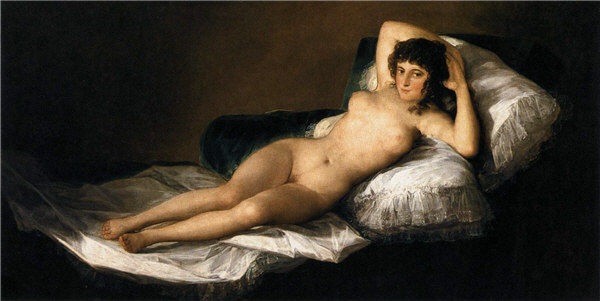
However, it is possible for something to find beauty in human sexuality. This is what we can term Erotica. Art depicting human sexuality in a beautiful manner. While it may not be the intent of the artist to cause arousal it is possible for arousal to occur when viewing even a beautiful representation of human sexuality. Here we see La maja desnuda (The nude maja) by 18th century painter Francisco de Goya. This painting is an example of erotica, we see the female form in a sexualized yet beautiful position.
Yes this picture contains what might be seen as explicit nudity.
La Maja Desnuda
So my question is do you think that it is possible for something to be both pornographic and erotic(erotic meaning beauty from human sexuality)?
So for the sake of argument we will stick with carnal lust. I believe that it is possible for something to be both beautiful and carnally desirable. The distinction between pornography and art comes from intention. If something has the primary purpose of awakening lust then it is pornography.
However, it is possible for something to find beauty in human sexuality. This is what we can term Erotica. Art depicting human sexuality in a beautiful manner. While it may not be the intent of the artist to cause arousal it is possible for arousal to occur when viewing even a beautiful representation of human sexuality. Here we see La maja desnuda (The nude maja) by 18th century painter Francisco de Goya. This painting is an example of erotica, we see the female form in a sexualized yet beautiful position.
Yes this picture contains what might be seen as explicit nudity.
La Maja Desnuda
So my question is do you think that it is possible for something to be both pornographic and erotic(erotic meaning beauty from human sexuality)?
Saturday, February 13, 2010
Response to Nicole's "Canibalism"
It would be very unwise to dismiss another culture's customs on the basis of morals. But it is unfair to say that our system of morals is "too rigid." Cultures, even cultures with common histories (American/British/Australian), have huge differences in morals. Americans for instance are deeply bothered by human sexuality, but less bothered by mediated displays of violence. The opposite is true in Britain.
Maybe each culture's system of morals is "too rigid," too unwilling to accept the moral differences in neighboring cultures.
What is the appropriate action when two cultures' morals clash on fundamental principles?
Maybe each culture's system of morals is "too rigid," too unwilling to accept the moral differences in neighboring cultures.
What is the appropriate action when two cultures' morals clash on fundamental principles?
Response to Katherine's "Offensive Art"
I believe that they aren't so much more important than one another as they are different. It requires the intention of the creator for something to be considered art. However the quality of the art is judged by the audience.
If an artist produces a song it is most certainly art. It meets all of the basic qualifications of art. It is intended to be art and it is a creation. But if nobody likes the song it is considered a bad song. It's still art, but it has been deemed bad art. But that's only if the question involves the quality of art. If the question is, "What is more important to the decision of something being art the intention or the reception?" then I'd say the intention is not only more important but completely integral, the reception is irrelevant.
If an artist produces a song it is most certainly art. It meets all of the basic qualifications of art. It is intended to be art and it is a creation. But if nobody likes the song it is considered a bad song. It's still art, but it has been deemed bad art. But that's only if the question involves the quality of art. If the question is, "What is more important to the decision of something being art the intention or the reception?" then I'd say the intention is not only more important but completely integral, the reception is irrelevant.
Thursday, February 4, 2010
Response to Misty's "Can There Be Too Much Knowledge?"
I'd like to begin by saying that I disagree with the assertion that humans have a finite capacity for knowledge. Never have I encountered a time when a human has honestly said, "I have reached the limit, I can learn no more." The only time a human stops learning is when he dies.
Equally disturbing is the assertion that a human should ever stop trying to learn about something. We can never know exactly what a poet or author meant by their works. So we continue to study, to attempt to learn to come closer to true understanding.
As for string theory? I find it too extreme to assume that everything in existence has invisible strings connecting each other.
"The theory depends for its existence upon magical coincidences, miraculous cancellations
and relations among seemingly unrelated (and possibly undiscovered) fields of mathematics." -Paul Ginsparg and Sheldon Glashow
Physics Today, May 1986
A more reasonable theory, especially when it pertains to literature is the idea of Degrees of Separation. That you can connect anything to anything else logically, but not physically.
Equally disturbing is the assertion that a human should ever stop trying to learn about something. We can never know exactly what a poet or author meant by their works. So we continue to study, to attempt to learn to come closer to true understanding.
As for string theory? I find it too extreme to assume that everything in existence has invisible strings connecting each other.
"The theory depends for its existence upon magical coincidences, miraculous cancellations
and relations among seemingly unrelated (and possibly undiscovered) fields of mathematics." -Paul Ginsparg and Sheldon Glashow
Physics Today, May 1986
A more reasonable theory, especially when it pertains to literature is the idea of Degrees of Separation. That you can connect anything to anything else logically, but not physically.
Monday, February 1, 2010
What is Natural?
In class we came across the problem of Nature not being art. The way I see it Nature is anything that occurs in the world without the influence of Man. Yes, I understand that Man is part of nature therefore shouldn't everything he creates also be a part of Nature? I'm going to say no because of the need to draw a line. Otherwise everything in creation is natural and there will never be a distinction between the works of Man and the works of Nature.
Some of the things that Man has made are grand testaments to our skill and determination and never in nature will there be a Statue of Liberty or a Sistine Chapel. And credit must be given where credit is due.
Additionally, Nature has created works that Man cannot hope to recreate in the same splendor.
So instead of having to make Nature and Art categories of each other, I believe that it makes sense to make them aesthetic peers.
Question: If Nature and Art are aesthetic peers, are there any other categories that need to be amongst them?
Some of the things that Man has made are grand testaments to our skill and determination and never in nature will there be a Statue of Liberty or a Sistine Chapel. And credit must be given where credit is due.
Additionally, Nature has created works that Man cannot hope to recreate in the same splendor.
So instead of having to make Nature and Art categories of each other, I believe that it makes sense to make them aesthetic peers.
Question: If Nature and Art are aesthetic peers, are there any other categories that need to be amongst them?
Saturday, January 30, 2010
Response to Katherine's "Removal of Art"
The comparison of tattoo removal and painting destruction is unfair. For the simple fact that a tattoo is a marking on your own body and you have the right to your own body(Let's avoid bringing abortion into this.) While burning a famous work of art would be destroying someone else's property. Or one could argue a piece of shared property. Think about it, would you go around trying to remove other people's tattoo's?
Question: If one creates a work of art that becomes a focal point of a community's culture, who owns the art, the artist or the community?
Question: If one creates a work of art that becomes a focal point of a community's culture, who owns the art, the artist or the community?
Wednesday, January 27, 2010
Response to Shawna's "Seeing is Believing."
I've always taken the phrase to mean something different. I don't believe that the statement means that ideas solidify into indisputable facts in our minds as soon as we're introduced to them. Rather it means that when we see something in front of us it is an undeniable fact that it is there. Now, just because someone shows me a movie with dinosaurs firing lasers at F-22s, doesn't mean that I believe that they're real.
The existence which I cannot deny is the existence of the film itself.
If there is an apple in front of you then you will believe that the apple is there. Should the apple feel waxy when you touch it you realize that it was a false apple. Just because you believe in something doesn't mean that that belief is permanent.
The existence which I cannot deny is the existence of the film itself.
If there is an apple in front of you then you will believe that the apple is there. Should the apple feel waxy when you touch it you realize that it was a false apple. Just because you believe in something doesn't mean that that belief is permanent.
Monday, January 25, 2010
Is there such a thing as color?
There are certain properties which make objects reflect certain parts of light that make us see colors. An apple reflects red light and thus the apple appears red. The apple's properties do not change just because the light is turned out. Perhaps the properties that make light reflect a certain way are the colors, just not always revealed. This apple is always red, but under a black-light or no light our ability to see the red is hampered.
If we use the truth as correspondence theory we can surmise that the apple is red and that it has scientific properties that allows us to see it as red. A desk is determined to be wood because it looks like wood, feels like wood and possesses the chemical properties of wood. So if we stop observing the desk we still retain the knowledge that it's chemical structure is wood. If we stop observing the red apple we remember that it has the microscopic properties that make it red.
If we use the truth as correspondence theory we can surmise that the apple is red and that it has scientific properties that allows us to see it as red. A desk is determined to be wood because it looks like wood, feels like wood and possesses the chemical properties of wood. So if we stop observing the desk we still retain the knowledge that it's chemical structure is wood. If we stop observing the red apple we remember that it has the microscopic properties that make it red.
Subscribe to:
Posts (Atom)